Link copied
Everything Is Going On-Chain: The $33.5 Billion Tokenization Revolution Reshaping How the World Owns Assets.
crypto :: 4hrs ago :: source - investorshd
By Ijlal Ahmed | InvestorsHD
 Everything Is Going On-Chain: The $33.5 Billion Tokenization Revolution Reshaping How the World Owns Assets. Image by Omar Hadad / Pixabay
In early 2025, the total value of real-world assets tokenized on public blockchains was approximately $5.8 billion. By April 2026 — just sixteen months later — that number had surpassed $30 billion, according to data from analytics platform RWA.xyz. By July 8, 2026, the genuinely liquid and tradable on-chain RWA value sits at approximately $33.5 billion, held across roughly 959,000 wallets. A separate and larger figure — $345 billion — reflects the pipeline and committed-but-not-yet-tradable value that RWA.xyz also tracks. And a Forbes investigation published July 2, 2026 found that across the full $60 billion of tokenized products tracked globally, over $32.9 billion has zero weekly transfer activity — meaning a significant portion of the market is structured or institutional does not freely trade. The $33.5 billion liquid figure is the honest number to use. That is still a 420% to 589% increase from early 2025, making tokenized real-world assets the fastest-growing segment of the entire digital assets market.
Real-world asset tokenization — often abbreviated as RWA tokenization — means taking something that exists off-chain (a US Treasury bill, a commercial building, a gold bar, a share of private equity, a barrel of oil) and issuing a digital token on a blockchain that represents the legal and economic rights to that asset. The token can settle in seconds, trade 24 hours a day seven days a week, and plug into automated compliance systems. For finance professionals accustomed to T+2 settlement windows, stacks of intermediaries, and banking hours, that is a genuinely significant upgrade. For investors, it means access to asset classes that were previously illiquid, minimum-investment-locked, and available only to institutions. This article covers the full picture: what is actually being tokenized in 2026, who the major players are, what the numbers actually show, and what the honest limitations are that the headlines tend to skip.
The Numbers — What $32 Billion Actually Looks Like By Asset Class
The $32 billion total is not evenly distributed. Understanding which asset classes are actually driving growth — and which remain more narrative than reality — is essential for any investor trying to evaluate this space.

Tokenized US Treasuries: $12.88 billion — the clear leader. US Treasury tokenization powered the majority of the entire sector's expansion, skyrocketing from $3.9 billion in early 2025 to beyond $15 billion at peak, settling near $12.88 billion as of mid-2026. BlackRock's USD Institutional Digital Liquidity Fund (BUIDL) — a tokenized Treasury-backed money market fund launched in March 2024 — reached over $2.5 billion in total asset value by May 2026. Franklin Templeton, Ondo Finance, and several other asset managers run similar products. The appeal is straightforward: Treasuries are the safest yielding asset on earth, and tokenizing them means they can settle in seconds on-chain, be held in a crypto wallet, and serve as collateral in DeFi protocols — combining the safety of government debt with the speed and programmability of blockchain infrastructure.
Tokenized commodities: $5.55 billion, up 289% — gold is driving this. Tokenized commodity products reached a combined market capitalization of $5.55 billion by Q1 2026, representing 289% growth from $1.43 billion. Gold-backed tokens issued by Tether (XAUT) and Paxos (PAXG) comprise 89.1% of this category. In Q1 2026 alone, spot trading volume for tokenized gold hit $90.7 billion — exceeding the entire annual 2025 volume of $84.64 billion in a single quarter. This extraordinary volume spike has a specific cause: during the US-Iran conflict in early 2026, Wall Street trading desks used on-chain gold perpetual futures platforms to price and trade gold during the weekend when conventional commodity markets were closed. Tokenized gold became the only functioning gold price discovery mechanism for roughly 36 hours during the conflict's opening weekend.
Tokenized stocks: ~$3 billion, up 50% in just one month — fastest growth rate. Equity tokenization expanded from approximately $2 million in market capitalization in early 2025 to roughly $487 million by April 2026 — and then continued accelerating sharply. By July 2026, overall tokenized stocks sit at approximately $3 billion, having grown roughly 50% in just one month. Kraken's xStocks platform, which tokenized SpaceX stock among others, exceeded $25 billion in cumulative trading volume within eight months of launch. Ondo Global Markets offers access to over 430 tokenized US stocks without KYC requirements. The DTCC — which clears and settles virtually every US equity trade — launched a pilot for tokenized securities trading in May 2026, with a commercial launch targeted for October.
Tokenized real estate: $202.7 million — still small, but regulatory milestones are significant. Real estate tokenization remains the segment that has attracted the most narrative attention but delivered the least in actual numbers. On-chain real estate value stands at approximately $202.7 million — less than 1% of the total RWA market. BeInCrypto's July 2026 research report noted that real estate has actually declined year-to-date as a category. That said, 2026 brought meaningful regulatory milestones: Dubai's Land Department opened the second phase of its tokenization project in February 2026, enabling tokenized property units for resale. Goldman Sachs' Digital Asset Platform is now being used by Apex Group for fund services covering tokenized properties. The infrastructure is being built — the scale is simply not there yet.
Private credit: growing rapidly but harder to measure. Platforms like Maple Finance and Centrifuge have demonstrated that private credit — traditionally one of the most illiquid and access-restricted asset classes — can be issued, managed, and settled on-chain with institutional-grade compliance. Private credit tokenization is real and growing but harder to quantify precisely because much of it occurs in semi-private institutional environments rather than public on-chain markets.
The Watershed Moment — How Tokenized Gold Priced Itself During the Iran War
The single most revealing event in the history of real-world asset tokenization happened in late February 2026, and most people outside professional finance did not notice it at all. When the US and Israel launched Operation Epic Fury against Iran on a Saturday morning — while every major traditional commodity market on earth was closed — on-chain gold perpetual futures platforms became the only functioning mechanism for gold price discovery in the world for approximately 36 hours.
Wall Street trading desks, unable to access traditional commodity markets, turned to tokenized gold platforms to hedge their exposure, express views on the conflict's impact on energy and safe-haven assets, and discover where the price of gold should be given the sudden geopolitical shock. In-chain commodity perpetuals increased 9x during this period, making up almost 70% of builder-deployed contracts on decentralized exchanges during the conflict weekend. The correlation between tokenized gold and traditional gold markets crossed the 0.70 threshold in Q1 2026 — a historically weak relationship that has strengthened considerably. The on-chain market is no longer pricing in isolation. It is becoming part of the global price discovery process itself.

This event matters beyond gold specifically. It demonstrated something that advocates of RWA tokenization had been arguing theoretically for years but could not prove empirically: that on-chain markets for real-world assets can function as genuine primary markets, not just secondary shadows of traditional markets, precisely because they never close. The implication for every major asset class — from oil to equities to bonds — is significant.
Who Is Building This — The Institutional Players Now Fully Committed
The era of pilot programs and white papers is over. The institutions building real-world asset tokenization infrastructure in 2026 are not crypto-native startups making bold promises — they are the largest and most conservative financial institutions on earth, deploying real capital into production systems.
BlackRock: BUIDL fund at $2.5+ billion in assets. The world's largest asset manager running a tokenized money market fund on Ethereum is perhaps the single clearest signal that institutional tokenization has crossed from experiment to operation.
DTCC: The institution that clears virtually every US equity trade launched a tokenized securities pilot in May 2026, targeting a full commercial platform launch by October. When the DTCC moves, the entire US equity settlement infrastructure moves with it.
Goldman Sachs: Digital Asset Platform now providing fund services for tokenized properties through its partnership with Apex Group. Goldman entering real estate tokenization infrastructure is a significant signal for a segment that has so far lagged other categories.
Standard Chartered: Geoff Kendrick projects the share of tokenized RWAs used in DeFi protocols rising from the current 10% to 30% by 2030, with total DeFi assets potentially reaching $2.7 trillion. Standard Chartered has been one of the most active traditional banks building on-chain infrastructure.
Kraken (xStocks): $25 billion in cumulative trading volume for tokenized equities including SpaceX stock within eight months. A crypto exchange becoming a significant venue for equity price discovery was not on most forecasters' 2026 bingo cards.
Franklin Templeton, Ondo Finance, Maple Finance, Centrifuge: All running production-scale tokenized Treasury and private credit products with genuine institutional and retail inflows.
Ethereum Dominates — But the Competition Is Real
Ethereum currently holds approximately 65% of the total value in distributed RWAs on-chain. This dominance is not accidental — Ethereum's combination of security, decentralization, deep liquidity, and the largest developer ecosystem on any blockchain makes it the natural settlement layer for institutional tokenization. BlackRock chose Ethereum for BUIDL. Most major tokenized Treasury products are Ethereum-native. The correlation between Ethereum's network activity and RWA growth is direct and measurable.
But the competition for RWA market share is genuine and intensifying. Solana's speed and low transaction costs make it attractive for high-frequency tokenized asset trading. Avalanche has won several institutional tokenization partnerships with its dedicated subnet architecture. Stellar has a long history in cross-border payment tokenization. Polygon and Arbitrum are both active in the space. As Binance Research noted in its June 2026 report, '2026 marks RWA tokenization's maturation from a Treasury-dominated narrative into a diversified yield ecosystem' — and that diversification is happening across multiple blockchains, not just Ethereum.
The Honest Limitations — What the Headlines Skip
The growth numbers for RWA tokenization are real and the institutional momentum is genuine — but a complete picture requires acknowledging the significant limitations that BeInCrypto's July 2026 research report, among others, documented clearly.
97% of tokenized asset value sits outside US retail reach, and much of what exists is not actively trading. The overwhelming majority of tokenized RWA value is in institutional products with high minimum investments, accredited investor requirements, or geographic restrictions. The democratization narrative — that tokenization will let ordinary investors access asset classes previously available only to the wealthy — is a real long-term possibility, but it is not the current reality.
Many tokenized stocks provide price exposure, not actual ownership. A significant portion of tokenized equity products give investors synthetic exposure to a stock's price movements — they do not provide actual share ownership with voting rights, dividend entitlements, or the same investor protections as a direct share purchase through a regulated broker. This is not necessarily a dealbreaker, but it is a fundamental difference that investors need to understand before comparing tokenized stocks to traditional equity.
Oracle risk is real and underappreciated. Tokenized assets depend on price oracles — external data feeds that bring the real-world price of gold, or Treasury yields, or a stock price onto the blockchain. If the oracle feed fails or is manipulated, it can trigger cascading liquidations in DeFi protocols using that tokenized asset as collateral. This is not a theoretical risk — oracle manipulation has caused real losses in DeFi before.
Real estate remains far behind its hype. $202.7 million in tokenized real estate on-chain, declining year-to-date, against a global real estate market worth over $300 trillion. The legal complexity of property rights, varying regulations across jurisdictions, and the challenge of representing physical location-dependent assets as fungible blockchain tokens means that real estate tokenization at meaningful scale is still years away, despite the narrative suggesting otherwise.
What This Means for Investors in July 2026
Tokenized Treasuries are the most mature and accessible entry point. If you hold crypto and want to earn yield without leaving the blockchain ecosystem, tokenized Treasury products from BlackRock (BUIDL), Franklin Templeton, or Ondo Finance offer government-bond-level safety with on-chain settlement. These are not experimental — they are production-scale institutional products.
Tokenized gold is now a genuine trading market, not a novelty. PAXG and XAUT have crossed the threshold where their price correlation to traditional gold is strong enough to serve as a genuine substitute for weekend and after-hours gold exposure. The Iran conflict weekend proved this empirically.
The DTCC October launch is the most important event to watch. If the DTCC's commercial tokenized securities platform launches on schedule in October 2026, it will bring the settlement infrastructure for the entire US equity market on-chain. That is not a crypto story — it is a fundamental change to how stocks are owned and transferred in the United States.
Ethereum's dominance in RWA makes it the clearest infrastructure play. With 65% of all tokenized RWA value settled on Ethereum, the growth of this sector is directly positive for Ethereum network activity — and therefore for ETH's deflationary fee-burn mechanism. This is one of the most concrete and least speculative bull cases for ETH at its current depressed price levels.
The Bottom Line
Real-world asset tokenization is the part of the blockchain story that the mainstream financial press is still substantially underreporting. It does not have the price volatility of Bitcoin to generate daily headlines. It does not have the meme-coin drama that drives social media engagement. What it has instead is $32 billion in verified on-chain value, growing at 420%+ in sixteen months, backed by BlackRock, Goldman Sachs, the DTCC, Franklin Templeton, Standard Chartered, and Kraken — the most conservative and the most innovative institutions in finance simultaneously building the same infrastructure from different directions.
The honest assessment: tokenization is real, it is growing, and the institutional foundations being built in 2026 are genuinely significant. The access limitations, the oracle risks, and the gap between real estate narrative and reality are equally real. The next phase of this market — whether it reaches Citi's projected $5.5 trillion by 2030, or something significantly different — depends on regulatory clarity, infrastructure maturation, and whether the DTCC and others can bring the legal and technical frameworks to a scale where ordinary investors, not just institutions, can participate meaningfully. That transition is underway. It is not complete. And it is arguably the most important structural change happening in global finance right now.
Sources
1. Tokenized RWAs Surge 589% as Stocks, Gold Outperform Crypto — Binance Research / Blockchain.news, June 9, 2026
2. Real-World Asset Tokenization Explodes Past $30 Billion Milestone in 2026 — MoneyCheck, May 1, 2026.
3. Tokenized Real-World Assets Market Surges to $32 Billion — Cryptonomist, July 8, 2026.
4. Reality of RWA Tokenization in 2026: Only One Asset Class Is Ready for Prime Time — BeInCrypto / Yahoo Finance, July 2026.
5. 5 Verticals Driving Real-World Assets Tokenization in 2026 — BitKE, July 2026.
6. Real-World Asset Tokens: Blockchain Investments Backed by Assets — MetaMask / RWA.xyz, May 24, 2026.
7. Real-World Asset Tokenization in 2026: How Businesses Are Bringing Assets On-Chain — Vanderbilt Report, June 19, 2026.
8. Tokenized Stocks, Real Estate, and Treasuries: Why 2026 Is the Year RWA Goes Mainstream — Coinmonks / Medium, March 23, 2026.
Risk Disclaimer
This article is for informational and educational purposes only and does not constitute financial, investment, or trading advice. All data and market statistics referenced in this article are sourced from publicly available reporting as of July 2026. Tokenized real-world assets, blockchain platforms, and cryptocurrency markets carry significant risk including regulatory uncertainty, smart contract vulnerabilities, oracle failures, and potential loss of funds. Past performance is not indicative of future results. Always conduct your own research and consult a qualified financial advisor before making any investment decisions. The author and InvestorsHD are not responsible for any financial losses based on the information in this article.
This week top market trends.
-
PayPal raises profit outlook as Q2 earnings top forecasts
2026-07-28 :: companies :: investing.com -
Coldcard wallet losses may near $114 million as possible fourth sweep emerges
2026-08-03 :: crypto :: coindesk -
Magnificent 7 results set to test broadening US stock market
2026-07-29 :: stock :: reuters

Recent global market news
-

Fed holds interest rates steady for fifth straight-meetings, but inflation still clouds outlook
2026-07-30 :: :: cnn business -
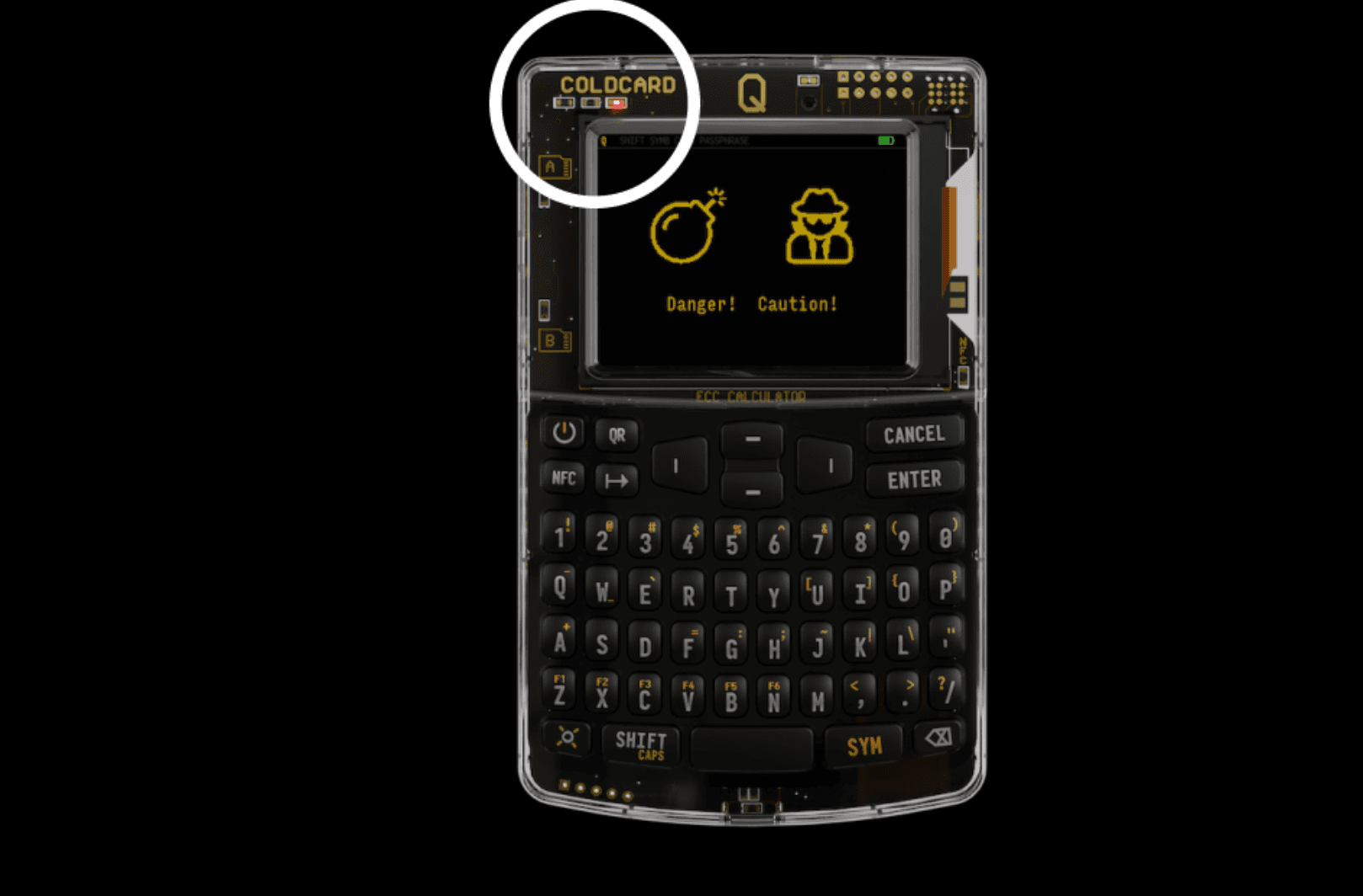
Coldcard wallet losses may near $114 million as possible fourth sweep emerges
5hrs ago :: :: coindesk